Call 408-257-5950 • 19000 Cox Avenue, Suite A • Saratoga, CA 95070

How Dental Veneers Work, and What Helps Them Last: A Saratoga Guide
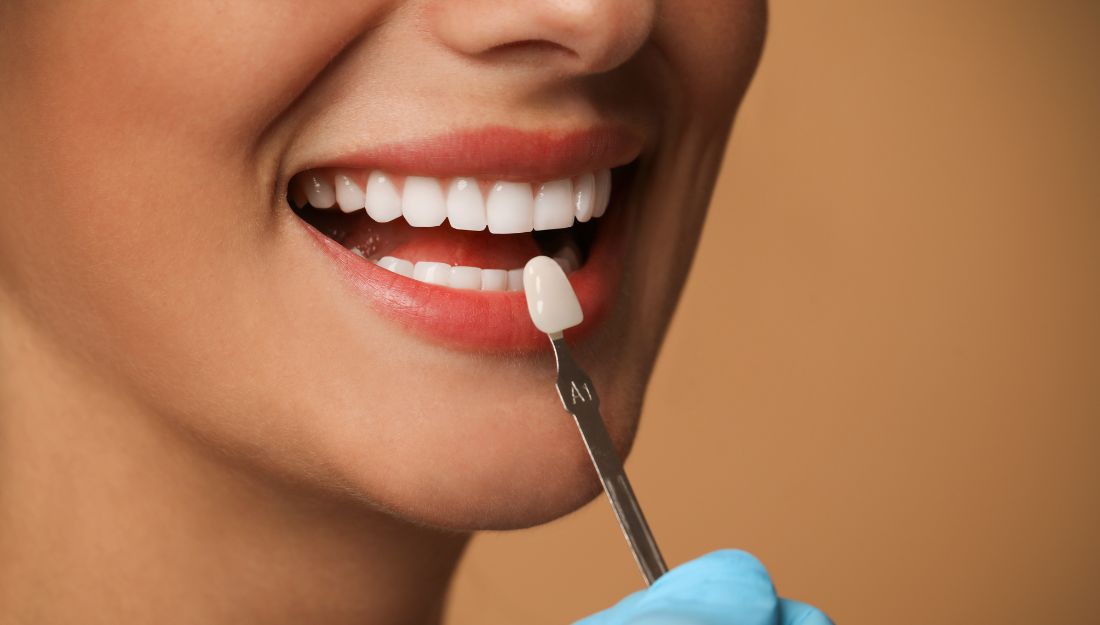
Hold a porcelain veneer up to the light before it’s placed and it looks almost too delicate to be useful. Most are about half a millimeter thick, closer to a fingernail than a tooth. You could snap one between your fingers.
Once it’s bonded to a tooth, though, that same thin shell becomes remarkably tough. Many veneers stay in place and keep their color for well over a decade. The difference comes down to chemistry, material science, and a handful of habits that patients control themselves. If you’re considering veneers in Saratoga, knowing how they actually work makes it much easier to judge whether they fit your smile and what it takes to keep them looking right.
What a Veneer Actually Is
A veneer is a custom shell that covers the front surface of a tooth. In many cases it wraps slightly over the biting edge, but it doesn’t encase the whole tooth the way a crown does. The back of the tooth, most of its sides, and everything beneath the gumline stay natural.
Most veneers are made from dental porcelain, a family of ceramics designed to mimic enamel. Some are made from composite resin instead, the same tooth-colored material used for bonding. Composite can be shaped directly on the tooth in a single visit, while porcelain is crafted to precise measurements from an impression or digital scan. The two behave differently over time. Porcelain is what most people mean when they talk about veneers, so it’s the focus here.
Why a Small Amount of Enamel Comes Off First
This is the part patients ask about most, and it deserves a straight answer. In most cases, a thin layer of enamel is removed from the front of the tooth before a porcelain veneer is placed. The amount is usually small, often a few tenths of a millimeter, but it’s permanent. Enamel doesn’t grow back.
The reason is space. Without that reduction, the veneer would sit on top of the tooth and add thickness, and the result could look bulky or push the lip forward. Removing a thin, even layer lets the finished tooth keep a natural profile.
There’s a second reason that’s less obvious. The goal isn’t to remove as much as possible. It’s to stay within the enamel wherever you can, because enamel is by far the best surface for bonding. A careful preparation that leaves healthy enamel behind sets up a stronger bond. Some cases need very little reduction, depending on the shape and position of the teeth, and that’s something Dr. Araldi evaluates tooth by tooth.
The Bond: How a Thin Shell Becomes Part of the Tooth
A veneer isn’t glued on in the everyday sense. It’s attached through a layered process that creates both a mechanical grip and a chemical connection.
On the tooth side, the enamel is treated with a mild acid gel for a short time. Under a microscope, this leaves the surface covered in tiny pores and ridges, a texture sometimes compared to a honeycomb. On the veneer side, the inner surface of the porcelain is etched in a similar way and then coated with a primer that lets ceramic and resin link together chemically.
A resin cement goes between the two. It flows into the microscopic texture on both surfaces, and when a curing light is applied, it hardens in place. What you end up with is a single bonded unit: tooth, cement, and porcelain locked together so tightly that chewing forces spread across the whole structure instead of concentrating in the thin shell.
So a veneer that would crack easily on its own can handle normal chewing for years once it’s bonded. The tooth supports the porcelain, and the porcelain protects the front of the tooth.
Why Porcelain Looks Like a Real Tooth
Natural teeth aren’t a flat, solid white. Enamel is slightly translucent, so light passes partway into it, scatters, and reflects back from the layer beneath. That’s what gives healthy teeth their depth, along with the faint see-through quality you can spot along the biting edges.
Dental porcelain handles light in a similar way. It can be layered and shaded so the edge is a little more translucent and the body of the tooth a little more opaque, the same pattern you’d find in natural enamel. A flat, uniform white would read as artificial from across a room, which is why well-made veneers have that variation built in.
Shape matters just as much as color. The length of each tooth, the curve of the edges, and how the teeth sit against your lips and gum line all get planned before anything is made.
Why Veneers Hold Their Color
Natural enamel is porous at a microscopic level. Pigments from coffee, tea, red wine, and similar foods work their way into it over time, which is why teeth gradually darken. Porcelain is different. Its glazed surface is smooth and dense, so staining compounds have very little to grab onto.
That stain resistance has a flip side. Porcelain doesn’t pick up stains easily, but it also doesn’t respond to whitening. Once a veneer’s shade is set, it stays that shade. If you’re only veneering some of your teeth, it usually makes sense to whiten the natural teeth first, let the shade settle, and then match the veneers to that brighter color. Otherwise the veneers could end up matched to a shade you’d later want to change.
Composite veneers don’t share this advantage. Resin is more porous, and it can dull and pick up stains over the years. That’s one of the main reasons porcelain tends to last longer.
What Shortens a Veneer’s Life
Porcelain is hard, but it’s also somewhat brittle, a bit like glass. It handles steady chewing pressure well and sharp, sudden force poorly. Most veneer problems trace back to a few familiar causes:
- Grinding and clenching. Nighttime grinding puts repeated, heavy force on the edges of the teeth and is one of the leading reasons veneers chip.
- Using teeth as tools. Tearing open packages, biting fingernails, chewing pens, or crunching ice can chip porcelain in an instant.
- Decay at the edges. The veneer itself can’t decay, but the natural tooth around and behind it still can, especially where the veneer meets the tooth.
- Gum changes. If the gums recede, the edge of the veneer can become visible. That’s a cosmetic issue rather than a failure, but it’s a common reason for replacement.
- Harsh products. Highly abrasive toothpastes can slowly wear down porcelain’s glaze and dull its shine.
Most of these are within your control.
Caring for Veneers in Saratoga: Everyday Habits That Help
Veneers don’t need a special cleaning routine. They need the same care as natural teeth, done consistently.
Brush twice a day with a soft brush and a non-abrasive toothpaste, and floss daily, paying close attention to the gum line where the veneer meets the tooth. Keep up with regular cleanings and exams, since that’s when small issues at the margins get caught early. If you grind or clench, ask about a custom nightguard to protect the porcelain while you sleep. And save your teeth for eating, not opening things.
With that care, porcelain veneers commonly last 10 to 15 years, and many go longer. When one eventually needs replacing, it’s usually because of wear, a chip, or changes in the gums or the tooth underneath, not because the porcelain simply gave out.
When Veneers Are the Right Fix, and When Something Else Fits Better
Veneers work best on teeth that are healthy but cosmetically off in some way. They’re well suited to:
- Discoloration that whitening can’t reach, such as deep internal stains
- Chipped, worn, or uneven edges
- Teeth that are small, oddly shaped, or out of proportion with their neighbors
- Small gaps between the front teeth
Other situations call for a different approach. Active gum disease or untreated decay needs attention first, since veneers depend on a healthy foundation. Teeth that are significantly crowded or rotated may be better served by moving them with Invisalign, sometimes followed by veneers or bonding if the shape still needs refining. And for a single small chip, composite bonding can often handle the repair without removing any enamel at all.
The right choice isn’t the most dramatic option. It’s the one that matches what’s actually going on with your teeth.
Talking Through Veneers With Dr. Araldi
The clearest way to know whether veneers make sense for you is a consultation where your teeth, gums, and bite are examined up close. Dr. Daniel Araldi and the team at Saratoga Dentistry can show you what veneers would change, how much preparation your teeth would need, and whether a more conservative option could give you the result you’re after. If you’ve been thinking about veneers in Saratoga, bring your questions with you, including the ones about enamel. That’s usually where the most useful part of the conversation begins.